
When They Say “Let’s Circle Back”—Here’s What They Really Mean
The first time someone said “Let’s circle back” to me, I thought it meant we were still in motion.
That we were going to return to the conversation. That the idea I’d just laid out—a clear, thoughtful, strategic next step—was going to land eventually.
It didn’t.
They never brought it back.
And when I did? I got the polite smile. The email nod. The slow fade.
Turns out, “Let’s circle back” wasn’t a placeholder.
It was a pause button with no plan to press play.
If you’ve ever walked out of a meeting thinking progress was made, only to realize you were just expertly dodged, you’re not imagining it.
“Let’s circle back” is often code for not now, maybe never, hope you forget.
And if you’re a woman, especially one who leads with decisiveness? You’ve probably heard it more than once—right after you made a strong ask or introduced a new direction.
Let’s talk about what it actually means—and how to respond when someone tries to circle you out of momentum.
What “Let’s Circle Back” Really Means
Not all circle backs are malicious. But they’re rarely neutral.
They’re often used in moments when discomfort is high and confidence is low. The words are soft, but the impact is sharp: delay, deflect, disappear.
Here’s what’s usually underneath the phrase:
“I don’t want to commit in front of other people.”
They might agree with you—but not publicly. Not right now. This isn’t about your idea. It’s about control.
What to do:
Follow up in writing. Be clear, brief, and specific.
“Circling back on our conversation—can we confirm direction by Friday?”
“I’m hoping you’ll drop it.”
This is a subtle shutdown in polite clothing. They’re stalling, hoping you won’t bring it back.
What to do:
Don’t take the bait.
“Let’s get this scheduled for next week so we don’t lose momentum.”
“I don’t have a better idea, but I’m not ready to say yes to yours.”
This is all ego. You’ve introduced a strong direction, and they’re not ready to let you drive.
What to do:
Invite clarity without confrontation.
“I’d love to hear what else you’re thinking so we can find the best way forward.”
“Someone else isn’t on board, and I don’t want to take the hit.”
Ah, the invisible veto. They’re not the blocker—they just know who is, and don’t want to deal with it.
What to do:
Put it in the light.
“Looping in [Name] to confirm alignment. Just want to make sure we’re set on next steps.”
Why It Keeps Happening
Because “Let’s circle back” is the perfect escape hatch. It’s vague. It sounds collaborative. It doesn’t invite argument.
And if you’re someone who moves fast, leads directly, or drives toward resolution? You’re especially likely to hear it. Why? Because your decisiveness demands a response. And not everyone is ready to give one.
Especially in rooms where female leadership is still expected to be nice before it’s necessary.
Let’s be honest:
“Let’s circle back” is often what people say when:
- You moved faster than they expected
- You asked for a decision they weren’t prepared to make
- You spoke like someone with power, and they didn’t see it coming
It’s not always personal. But it is usually avoidant.
And when you let it slide, your ideas don’t just stall—they disappear.
How to Respond (Without Getting Defensive)
You don’t need to call it out. You just need to keep it moving.
Here’s how:
- “Of course—what’s a good time to circle back?”
- “I’ll follow up after this to lock in next steps.”
- “Let’s pencil in a revisit so we stay on track.”
- “Is there anything else you’d need to feel good moving forward?”
Your tone matters.
Stay calm. Stay neutral. Stay unfazed.
You’re not pushing. You’re grounding.
You’re not being difficult. You’re being clear.
How to Keep It From Happening Again
If “Let’s circle back” is becoming a pattern in your work life, it’s time to set a new standard:
1. Add timeframes to all open items.
If someone agrees in theory, ask:
“What feels like a good time to close the loop?”
2. Reframe accountability as teamwork.
Instead of “I need an answer,” try:
“I want to make sure we’re aligned before this drags out.”
3. Track the follow-through.
Put it in the notes. Put it in the recap. Put it in the calendar invite.
People stall less when they know the conversation is coming back—with receipts.
The Cost of Polite Stalling
When people stall decisions with vague language, the cost isn’t just time—it’s clarity, trust, and momentum.
It’s your team wondering what’s happening.
It’s your workload piling up while direction stalls.
It’s your leadership being diluted every time your ideas are sent to purgatory.
You don’t have to fight to be heard. But you do have to follow through to be respected.
The Real Power Move
You don’t need to force decisions. You just need to make them unavoidable.
That’s what strong follow-up does.
So the next time someone says, “Let’s circle back,” let them.
Then show up right on time with the question they hoped you wouldn’t ask:
“Are we ready to move forward?”
Because you are.
And you’re not waiting for permission to lead.
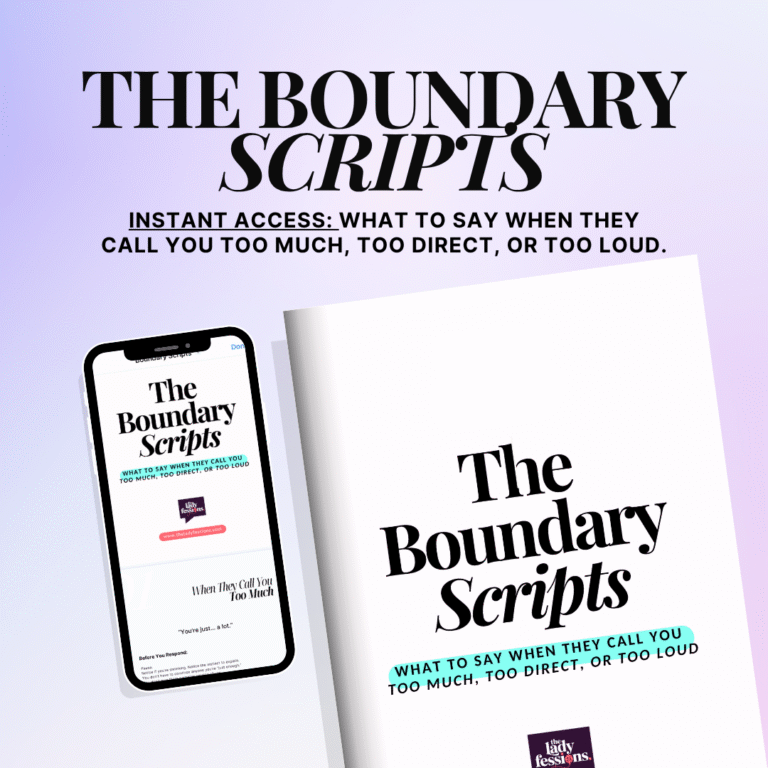
Want the exact scripts to follow up without sounding pushy?
Grab the free guide: Boundary Scripts — What to Say When They Try to Stall, Derail, or Delay Your Ideas.